


Page 10 - MDJ 2022 Jan-Jun, Volume 45 Number 1
P. 10
Wan Mustafa / Ng / Lim


                                                               0.5 millimetres per day for the remaining period until a
                                                               satisfactory result was obtained. The overjet was reduced
                                                               to about 4 millimetres at the end of the distraction period.
                                                               The total distraction time was 21 days.


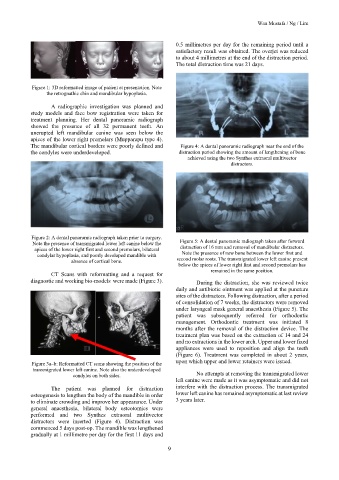
            Figure 1: 3D reformatted image of patient at presentation. Note
                 the retrognathic chin and mandibular hypoplasia.

                   A  radiographic  investigation  was  planned  and
            study  models  and  face  bow  registration  were  taken  for
            treatment  planning.  Her  dental  panoramic  radiograph
            showed  the  presence  of  all  32  permanent  teeth.  An
            unerupted  left  mandibular  canine  was  seen  below  the
            apices of the lower right premolars (Mupparapu type 4).
            The mandibular cortical borders were poorly defined and   Figure 4: A dental panoramic radiograph near the end of the
            the condyles were underdeveloped.                   distraction period showing the amount of lengthening of bone
                                                                   achieved using the two Synthes extraoral multivector
                                                                                  distractors.


            Figure 2: A dental panoramic radiograph taken prior to surgery.
            Note the presence of transmigrated lower left canine below the   Figure 5: A dental panoramic radiograph taken after forward
             apices of the lower right first and second premolars, bilateral   distraction of 16 mm and removal of mandibular distractors.
              condylar hypoplasia, and poorly developed mandible with   Note the presence of new bone between the lower first and
                          absence of cortical bone.            second molar roots. The transmigrated lower left canine present
                                                                below the apices of lower right first and second premolars has
                                                                           remained in the same position.
                   CT  Scans  with  reformatting  and  a  request  for
            diagnostic and working bio-models  were made (Figure 3).      During  the  distraction,  she was  reviewed twice
                                                               daily and antibiotic ointment was applied at the puncture
                                                               sites of the distractors. Following distraction, after a period
                                                               of consolidation of 7 weeks, the distractors were removed
                                                               under laryngeal mask general anaesthesia (Figure 5). The
                                                               patient  was  subsequently  referred  for  orthodontic
                                                               management.  Orthodontic  treatment  was  initiated  8
                                                               months  after  the  removal  of  the  distraction  device.  The
                                                               treatment plan was based on the extraction of 14 and 24
                                                               and no extractions in the lower arch. Upper and lower fixed
                                                               appliances  were  used  to  reposition  and  align  the  teeth
                                                               (Figure  6).  Treatment  was  completed  in  about  2  years,
                                                               upon which upper and lower retainers were issued.
            Figure 3a–b: Reformatted CT scans showing the position of the
             transmigrated lower left canine. Note also the underdeveloped
                           condyles on both sides.                    No attempts at removing the transmigrated lower
                                                               left canine were made as it was asymptomatic and did not
                   The  patient  was  planned  for  distraction   interfere with the distraction process. The transmigrated
            osteogenesis to lengthen the body of the mandible in order   lower left canine has remained asymptomatic at last review
            to eliminate crowding and improve her appearance. Under   3 years later.
            general  anaesthesia,  bilateral  body  osteotomies  were
            performed  and  two  Synthes  extraoral  multivector
            distractors  were  inserted  (Figure  4).  Distraction  was
            commenced 5 days post-op. The mandible was lengthened
            gradually at 1 millimetre per day for the first 11 days and


                                                            9

