


Page 12 - MDJ 2022 Jan-Jun, Volume 45 Number 1
P. 12
Wan Mustafa / Ng / Lim


                                             14
            the  findings of  Plakwiczw  et  al.  (2019),  who reported   considered in the diagnosis. This can then be confirmed by
            finding  type  4  transmigration  only  in  those  above  15.5   radiographic  investigation  when  treatment  planning  is
            years of age.                                      underway.

            Management                                                When impacted teeth are discovered within the


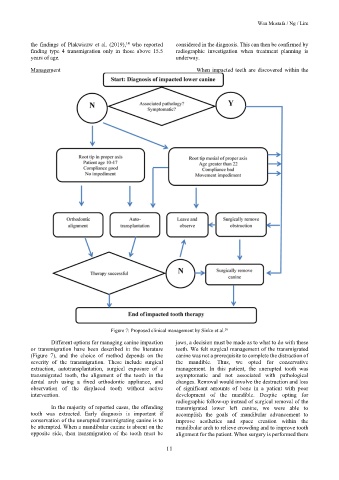
                                        Figure 7: Proposed clinical management by Sinko et al.
                                                                                16
                   Different options for managing canine impaction   jaws, a decision must be made as to what to do with these
            or  transmigration  have  been  described  in  the  literature   teeth. We felt surgical management of the transmigrated
            (Figure  7),  and  the  choice  of  method  depends  on  the   canine was not a prerequisite to complete the distraction of
            severity  of  the  transmigration.  These  include  surgical   the  mandible.  Thus,  we  opted  for  conservative
            extraction,  autotransplantation,  surgical  exposure  of  a   management.  In  this  patient,  the  unerupted  tooth  was
            transmigrated  tooth,  the  alignment  of  the  tooth  in  the   asymptomatic  and  not  associated  with  pathological
            dental  arch  using  a  fixed  orthodontic  appliance,  and   changes. Removal would involve the destruction and loss
            observation  of  the  displaced  tooth  without  active   of  significant  amounts  of  bone  in  a  patient  with  poor
            intervention.                                      development  of  the  mandible.  Despite  opting  for
                                                               radiographic follow-up instead of surgical removal of the
                   In the majority of reported cases, the offending   transmigrated  lower  left  canine,  we  were  able  to
            tooth  was  extracted.  Early  diagnosis  is  important  if   accomplish  the  goals  of  mandibular  advancement  to
            conservation of the unerupted transmigrating canine is to   improve  aesthetics  and  space  creation  within  the
            be attempted. When a mandibular canine is absent on the   mandibular arch to relieve crowding and to improve tooth
            opposite  side,  then  transmigration  of  the  tooth  must  be   alignment for the patient. When surgery is performed there


                                                           11

